What Is a Tub Grinder?
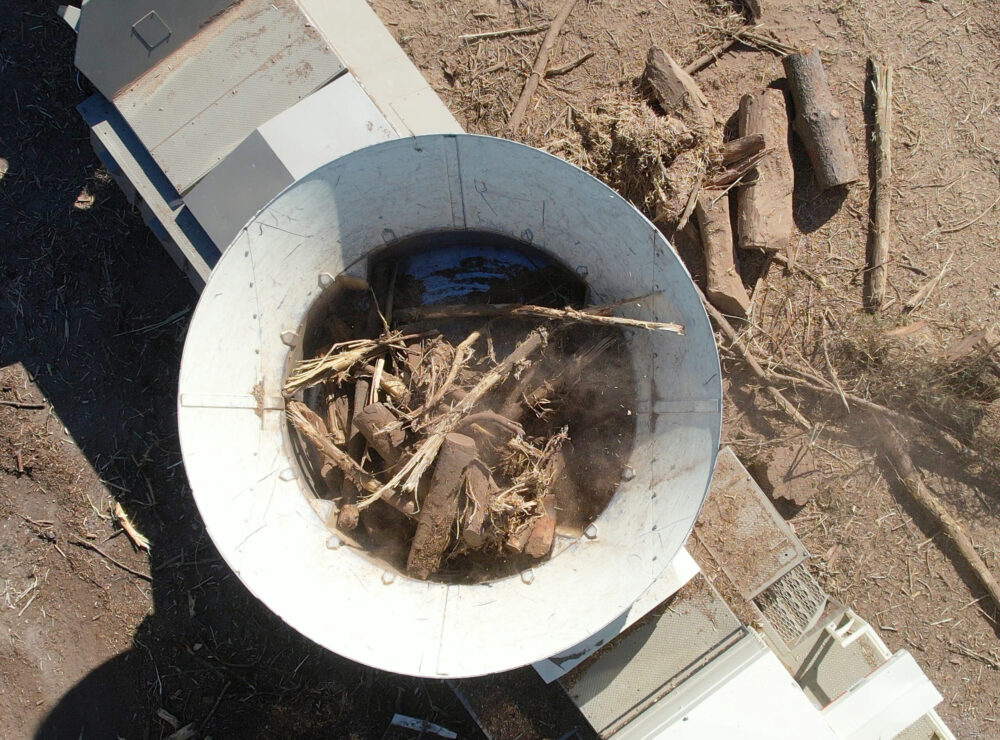
A tub grinder is an industrial grinding machine designed to process a wide range of bulky organic and recyclable materials. Tub grinders are widely used for mulch and wood fuel production, composting, land clearing, agricultural hay grinding, waste recycling, and applications such as scrap tire processing.
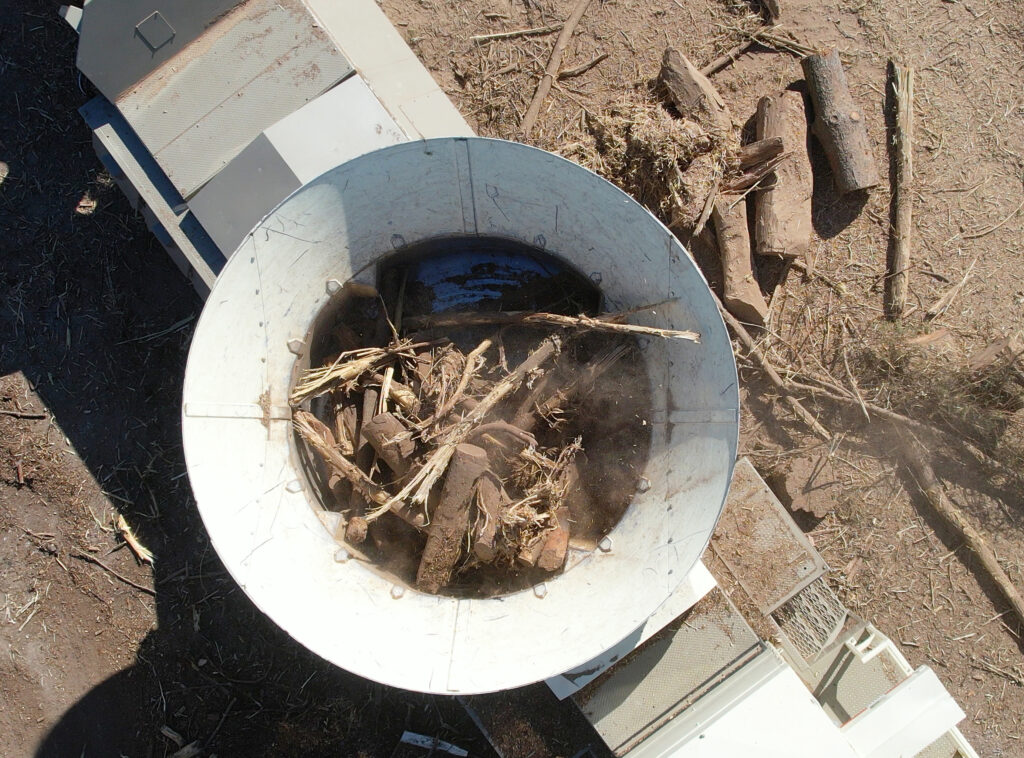
One of the defining advantages of a tub grinder is its ability to accept physically large, irregular material. For many machines, the practical infeed size is limited by the smallest dimension across the inside of the tub barrel. Because the tub surrounds the grinding chamber, large and oddly shaped material can often be presented to the mill without first being cut into smaller pieces. Large rooted stumps are a good example of material that can require the capacity and geometry of a large industrial tub grinder.
A typical tub grinder combines tub rotation with gravity to feed material toward the mill opening. Fins inside the rotating tub help move material around the tub while the grinding rotor progressively pulls material into the mill.
That rotating feeding action is important when dealing with large, awkward, or interlocking material. As the material shifts position, the mill sees different portions of the load rather than relying on a single straight-in feeding path. A steady loading rhythm and appropriate tub speed and direction help keep material moving and can reduce the tendency for material to bridge inside the tub. In many applications, higher input material density can translate into high production rates.
Key takeaway: Tub grinders are particularly suited to applications where material size, shape, and variability make simple, uniform feeding difficult.
Tub Grinder Safety
A tub grinder requires skilled, attentive operation, careful material management, proactive maintenance, and a controlled work zone. Safety planning must be specific to the machine, the application, and the location, because some sites may not be suited for grinding equipment.
Un-grindable contamination is one of the most important operating concerns. Large pieces of metal, rock, concrete, or other material that the grinding chamber cannot safely pass should be kept out of the feedstock. Preventing contamination is the first line of defense against major machine damage and potentially catastrophic hazards. Some machines may have mechanical or electronic features intended to limit damage after contamination enters the grinder, but those features do not replace good material inspection and proper maintenance of the mill components.

Ejection hazards also have to be evaluated for the specific site and application. The volume, velocity, trajectory, and distance of thrown material can vary with the material being processed and with the size, speed, and configuration of the mill. In a tub grinder, the ejection hazard is generally directed upward through the open top of the tub. Deflectors and thrown-object restraint systems can be used in different configurations, and equipment may be customized or modified to address site-specific needs.
A tub grinder should generally be stopped from feeding before the tub runs empty. As the material level drops, the risk of ejected material can increase, particularly when the tub continues feeding near empty. Remote control systems can support attentive operation by allowing the operator to make quick adjustments, stop and start the tub rotation, and use feeder controls intended to help clear potential jams.
Loading a Tub Grinder
The loading system is a major part of the grinding system. Loader capacity, reach, cycle time, and loading height all have to match the tub grinder and the job. The loader should be capable of supplying material fast enough to keep the grinder productively loaded, while still reaching the higher load height created by the surrounding tub walls.
Loader operator safety cabs are required, and material should never be hand-loaded into an industrial grinder. A mounted, self-feeding grapple loader can also provide a more self-contained and transportable grinding setup while giving the loader operator a higher vantage point for visibility.
What Affects Tub Grinder Production?
Choosing the right tub grinder is only part of achieving production goals. The machine, its setup, the material, and the loading process all have to work together. In practice, the loading operation can become the production bottleneck: an undersized or inefficient loading process may limit output even when the grinder has additional horsepower available.
The desired finished product also matters. Discharge characteristics can change with machine setup, and actual production runs may be necessary to determine the exact product characteristics for a particular material and configuration. Changeable screen grates allow the operator or owner to vary screen-hole size and geometry, while other setup choices can also influence productivity and the condition of the discharged material.
Tub Grinder Sizes and Configuration Options
Industrial grinding machines commonly range from roughly 200 horsepower to well over 1,000 horsepower. The appropriate size depends on the application, material, production expectations, and site conditions. A large industrial grinder may be able to handle smaller industrial jobs, but a small grinder will not normally perform well on a large job. No industrial grinder is intended for residential use, and no single machine or setup is right for every application.
Tub grinders can be configured with a variety of diesel or electric power options, mill drive arrangements, swing or rigid hammers, cutting-edge and tip choices, fire suppression systems, and track-mounted mobility. Individual machine setups may need to change from one job to another depending on the material and desired end product.
Tub Grinder Maintenance
Maintenance is generally considered to be much easier on a tub grinder compared to a horizontal grinder. Modern tilting tub floors pivot past 90 degrees, which provides wide open access to the mill area and allows operators to easily dump the tub when needed. Additionally, most HogZilla models eliminate the complex belt drive systems that can be found in competing machines, further simplifying service.
Choosing the Right Tub Grinder for the Job
A tub grinder works best when its size, feeding method, mill configuration, screens, loading equipment, and safety controls are selected around the actual application. The right machine is not simply the one with the most horsepower; it is the machine and setup that can safely handle the material, maintain the required feed rate, and produce the desired end product under the conditions of the job site.
Important: This article provides a general overview of tub grinding equipment. Machine designs, applications, operating conditions, hazards, and available features vary significantly. Specific information for the exact machine configuration and job site should be reviewed and incorporated into equipment selection, operation, maintenance, and safety planning.